

Choosing the right point-of-sale system is one of the most important decisions you'll make for your flower shop. The best florist software acts as the central hub for your entire operation, connecting your front counter, design bench, and delivery van. The wrong software, however, can create bottlenecks, frustrate staff, and lead to costly errors.
This in-depth guide explains the essential features you should look for in a modern floral POS. We'll cover what truly matters for managing orders, customers, inventory, and deliveries, so you can choose a system that supports your unique workflow instead of fighting against it.
Core Order and Customer Management
The foundation of any great florist software is how it handles orders and customers. This is more than just a digital cash register; it's the system of record for your shop's most important activities. Your software must be able to capture the rich detail of a floral order without slowing you down, whether the customer is on the phone, in your shop, or ordering online.
Look for a system that consolidates all order types into a single, manageable view. It should effortlessly handle the complexities that are unique to floristry. This includes capturing precise delivery information, including dates, time windows, and special instructions for the driver. For sympathy work, the software needs dedicated fields for the deceased's name, the funeral home, and service details. The ability to easily edit an order after it's been placed—to change a delivery address or update an enclosure card message—is critical for providing good service.
Equally important is robust customer management. A good system stores more than a name and phone number. It builds a complete customer history, showing past purchases, recipient addresses, and important notes like allergies or preferences. When a regular customer calls, your team should be able to see their entire history at a glance. This allows you to offer personalized service, like asking if they'd like to send the same arrangement they ordered last year for an anniversary. This level of detail is what separates a simple transaction from a lasting customer relationship and is a key way florist software improves your customer experience.
Product, Recipe, and Inventory Management
Managing what you sell is far more complex for a florist than for a typical retailer. You don't just sell items off a shelf; you create custom products from a perishable, constantly changing inventory of raw materials. The best florist software understands this distinction and provides tools built for a floral workflow.

Your software's product catalog should be flexible. You need the ability to define standard arrangements, plants, and gift items. But critically, you also need recipe management. A recipe links a finished arrangement to its components: the type and number of stems, greens, and hard goods like vases or ribbon. When an order for that arrangement comes in, the software can use the recipe to project inventory needs. This is fundamental for accurate costing and pricing. Without it, you're just guessing at your profit margins on every design.
Inventory tracking should happen at two levels. First, you need to track the sellable arrangements and products. Second, and more importantly, you need to track the component inventory—your stems and supplies. A good system helps you know how many stems of 'Freedom' roses you have in the cooler and how many are already committed to existing orders. This visibility prevents you from selling flowers you don't have and helps you make smarter purchasing decisions at the wholesale market. It transforms your inventory from a source of stress into a manageable asset.
Delivery and Route Management
For most florists, the business doesn't stop until the flowers are in the recipient's hands. Delivery management is not an afterthought; it's a core operational function. Your software should provide clear, powerful tools to organize, assign, and track deliveries efficiently. The chaos of a holiday morning, with a counter full of orders and drivers waiting for instructions, can be tamed by a system built for the job.
Effective delivery management starts with scheduling. The software should allow you to see all outgoing deliveries on a calendar, filterable by date, status, or delivery zone. This high-level view is essential for planning daily capacity and identifying potential problems before they happen. You should be able to define custom delivery zones with specific charges and rules, ensuring you price this vital service correctly.
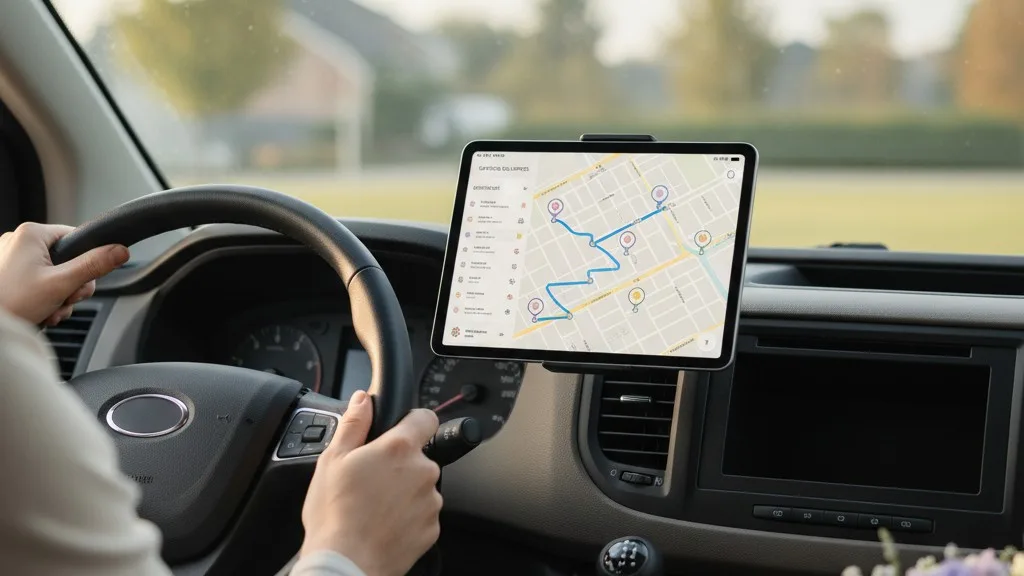
When it's time to load the van, your software should generate a route list or manifest for the driver. This is more than a list of addresses. A good route list includes recipient names, phone numbers, and any special instructions (“leave on the covered porch”). Some systems, like Orkyd, can also provide turn-by-turn directions and allow drivers to update delivery statuses from the road. This real-time information is invaluable. A quick status update from a driver can answer a customer's query—"Has my order been delivered yet?"—with a confident, accurate answer, freeing up staff in the shop to focus on other tasks.
Integrated E-commerce and Webstore
In today's market, a flower shop needs an online presence. Your website is your digital front door, and for many customers, it's the only storefront they will ever see. The best florist software includes an integrated e-commerce solution or a customizable webstore that is directly connected to your main POS system. This integration is the key to avoiding the nightmare of managing two separate businesses.
When your webstore and your in-shop POS are part of the same system, an order placed online instantly appears in your order queue alongside phone and walk-in orders. There's no need to manually re-enter information, which eliminates a major source of errors. The product catalog you manage for your shop is the same one customers see online. When you update the price of an arrangement or mark a product as sold out, the change is reflected everywhere at once.
This unified approach extends to inventory. If your software tracks stem counts, an online order for a dozen roses can automatically decrement your inventory, preventing you from selling the same flowers twice. This tight integration ensures your website is an accurate reflection of what you can actually deliver. It also provides a better experience for your customers, giving them the confidence to order online knowing the information is current. Some systems, like Orkyd, offer customizable online storefronts that let you maintain your shop's unique brand identity, avoiding the generic look of a wire service site.
Accounting and Reporting Features
Running a successful flower shop requires you to be as much a businessperson as a floral artist. Your software should be a powerful ally in understanding the financial health of your business. This comes down to two key functions: simplifying your daily accounting and providing clear reports that help you make informed decisions.
A direct integration with accounting software like QuickBooks Online is a must-have feature. Instead of manually entering daily sales totals, a good POS system can sync this data automatically. This saves hours of administrative work and reduces the risk of data entry errors. It ensures that your financial records are always up-to-date and accurate, which is a relief for you and your bookkeeper, especially during tax season.
Beyond accounting, your software should offer robust reporting tools. You need to be able to see more than just total sales. Look for a system that can answer specific questions:
- What were my most profitable arrangements last month?
- Which delivery zones are generating the most revenue?
- Who are my top customers by lifetime value?
- How did sales this Valentine's Day compare to last year?
These are not vanity metrics. These reports provide the data you need to make strategic decisions about purchasing, marketing, and staffing. They help you understand what's working and what's not, allowing you to focus your efforts where they will have the greatest impact. If you've ever felt like your shop is running on spreadsheets and intuition, you'll appreciate how dedicated software replaces guesswork with clarity.
Specialized Features for Florists
While the features above are crucial, some software goes further by addressing other specific needs of a modern flower shop. These specialized tools can solve particular workflow challenges and set your shop apart in terms of professionalism and service.
One such feature is integrated contract and e-signature capability. For shops that do a significant amount of wedding and event work, this is a major improvement. Instead of managing paper contracts or using a separate, disconnected service, you can generate and send proposals and contracts directly from your POS. The client can review and sign electronically, and the signed document is automatically saved with their customer record. Orkyd integrates with BoldSign to provide this exact capability, streamlining the entire event booking process.
Another valuable feature is customer messaging. This often takes the form of automated SMS or text messages. Your system can send an automatic confirmation when an order is placed and another when it has been successfully delivered. This proactive communication reduces customer anxiety and cuts down on “where is my order?” phone calls. It's a small touch that provides a professional, high-quality customer experience.
Finally, consider gift card functionality. A modern POS should allow you to issue, redeem, and track both physical and digital gift cards within the same system. This is a simple but effective way to drive repeat business and introduce new customers to your shop.
Choosing the Right Software Partner
The features of the software are important, but so is the company behind it. When you choose a floral POS, you are entering into a long-term relationship. You are trusting a significant part of your business to their technology and their support team. Look for a partner who understands the flower industry. LarkTek, the family-owned company that builds Orkyd, has deep roots in the funeral industry, a business that works hand-in-hand with florists every day. This background means the software is built with a genuine understanding of a florist's workflow.
Consider the pricing model. Many general POS systems and wire service platforms take a percentage of every sale. This means they make more money when you do, but they are also penalizing your growth. A flat monthly subscription, by contrast, is predictable and transparent. You pay one price regardless of how busy you are, which means your software costs don't go up during your most profitable seasons.
Ultimately, the best florist software is the one that fits your shop. It should feel like a natural extension of your process, making everyone's job easier, from the designer at the bench to the driver on the road. It should replace paper chaos with digital clarity and give you the tools and data you need to grow your business sustainably.
If you're looking for a system designed for the real-world workflow of a flower shop, we invite you to see how Orkyd handles these essential features. Book a conversation with us to learn more.