As the air turns crisp, your customers start looking for arrangements that capture the warmth and richness of autumn. Designing with seasonal fall flowers is the key to meeting that demand with fresh, vibrant, and cost-effective creations. Sticking to what’s in season provides better quality blooms, more interesting textures, and a healthier bottom line for your shop.
This guide walks through the best seasonal flowers for fall, from classic focal blooms to unique textural elements that will make your autumn designs stand out. We’ll cover how to source them, design with them, and manage your inventory for a profitable season.
Why Designing with Seasonal Fall Flowers Matters
Leaning into seasonal availability is a cornerstone of smart floral design and business management. When you prioritize fall-blooming flowers and foliage, you gain several advantages that benefit both your creativity and your operations. The most immediate benefit is often cost. Flowers that are naturally abundant require less energy to grow and ship, and those savings are passed from the grower to you. This allows you to either increase your margins or offer more competitive pricing.
Quality is another significant factor. Seasonal blooms are at their peak, meaning they arrive fresher, look more vibrant, and last longer for your customers. This translates to happier clients and fewer complaints about arrangements wilting prematurely. A reputation for long-lasting, beautiful flowers is one of the best marketing tools a shop can have.
Finally, designing with the seasons connects your work to the natural world in a way that customers appreciate. Autumnal arrangements are defined by their specific color palette and textures—deep reds, golden yellows, rustic oranges, and earthy browns. Using genuine seasonal fall flowers is the most authentic way to deliver that feeling.
Classic Fall Flowers for Your Cooler
While trends come and go, some flowers are the undeniable stars of autumn. Keeping these staples in your cooler ensures you can meet a wide range of customer requests, from simple bouquets to large-scale event installations. Building a strong product catalog around these reliable blooms can also simplify your ordering process.
For each of these classics, consider their unique characteristics and how they fit into your fall floral design language.
Chrysanthemums (Mums)
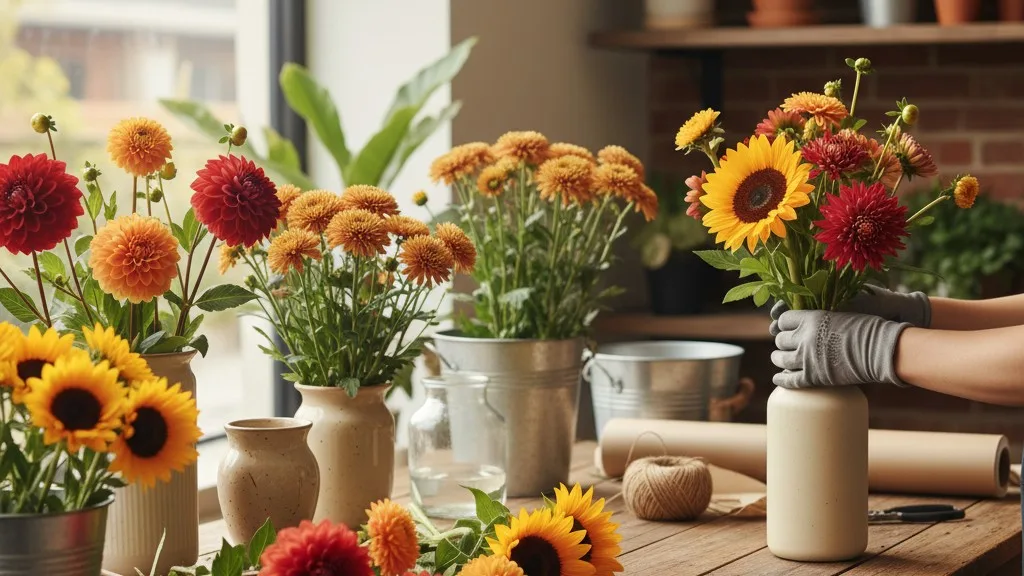
Often relegated to porch pots, chrysanthemums offer incredible variety for cut-flower arrangements. Football mums provide a large, dramatic focal point, while spider mums add a spiky, modern texture. Button and cushion mums are excellent fillers, adding pops of color and fullness. Their earthy scent is quintessentially fall, and their hardiness makes them a long-lasting and reliable choice. They come in every classic autumn shade, from deep bronze and burgundy to golden yellow and creamy white.
Dahlias
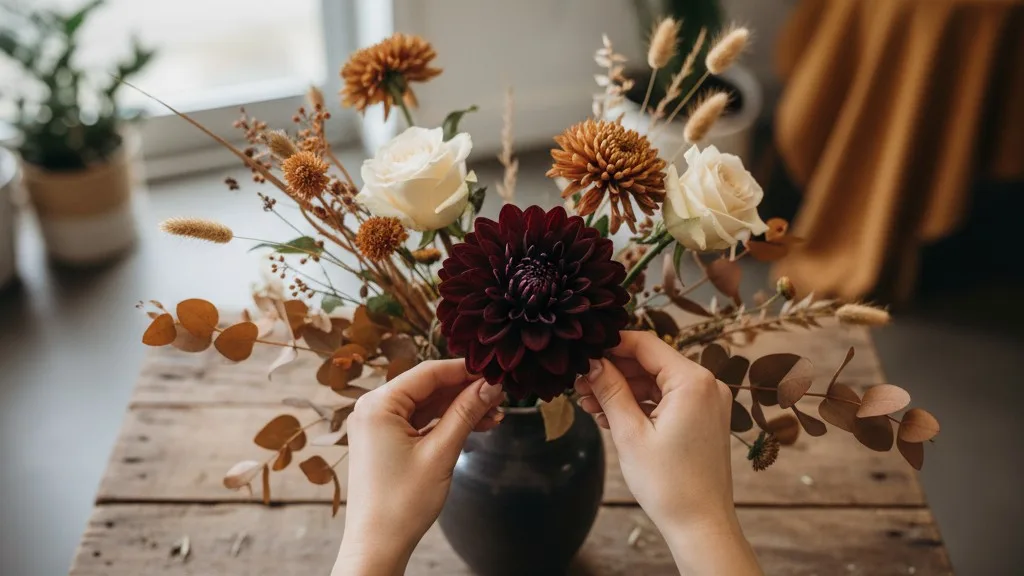
Dahlias are the showstoppers of late summer and early fall. With forms ranging from the perfect spheres of ball dahlias to the sprawling, dramatic plates of dinnerplate varieties, they provide unmatched visual impact. Their season is fleeting, which adds to their special appeal. Use them as the prized focal flower in high-end arrangements and bridal bouquets. Because they can be delicate and have a shorter vase life, be sure to educate customers on proper care. Their cost reflects their beauty and seasonality, so price them accordingly.
Sunflowers
While often associated with summer, many sunflower varieties peak in the fall. Classic yellow sunflowers bring a cheerful, rustic feel to any arrangement. For a more subdued and sophisticated autumn palette, look for varieties in deep red, bronze, and chocolate brown. Their tall, sturdy stems make them ideal for larger vase arrangements, and their distinct faces draw the eye. They pair beautifully with other fall textures like grasses and grains.
Adding Unique Textures with Fall Botanicals
Great fall floral design is about more than just color; it’s about texture. Incorporating a variety of botanicals alongside your focal flowers adds depth, movement, and interest. Many of these elements are hardy and long-lasting, and some can even be dried and used throughout the winter. Using interesting textures is a way to set your shop's style apart and offer customers something truly unique.
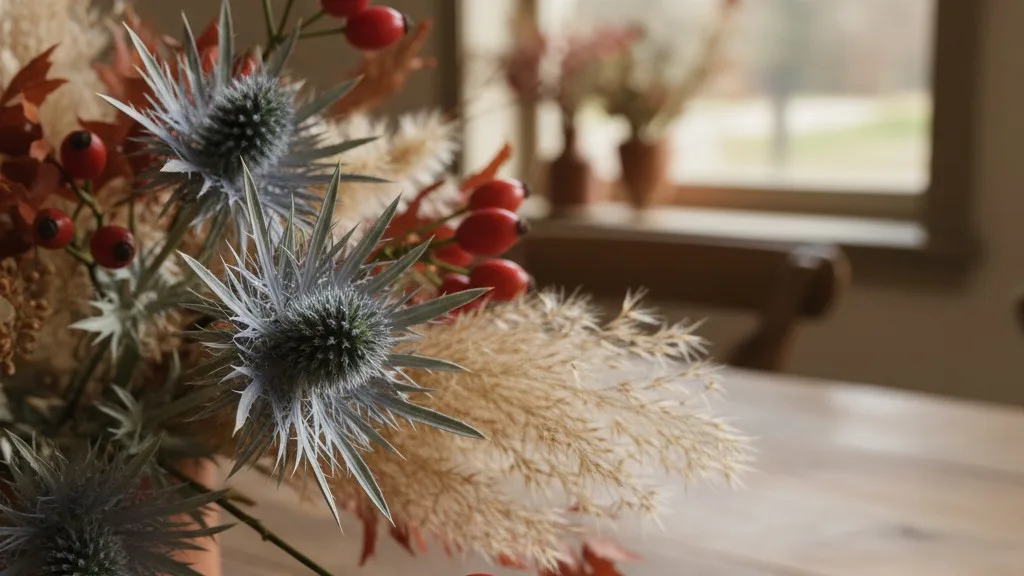
Look for these elements from your wholesalers or even local growers. Foraging can be an option, but always ensure you have permission and are aware of local regulations before gathering materials from the wild.
Grasses and Grains
Dried and fresh grasses are essential for creating the airy, natural look popular in modern floral design. Consider using millet for its cattail-like plumes, bunny tail grass for soft, delicate puffs, or pampas grass for dramatic, feathery statements. Wheat and oats add a rustic, harvest-time feel. These elements are cost-effective and can fill a lot of space while adding sophisticated texture.
Berries and Pods
Berries add wonderful pops of color and a different kind of texture. Hypericum berries are a florist staple, available in shades of red, peach, and green. For something more unique, consider viburnum berries, which offer deep blues and blacks. Rose hips provide a rustic, orange-red accent. After the flowers fade, seed pods like scabiosa pods or poppy pods offer intriguing, sculptural shapes that work well in both fresh and dried arrangements.
Foliage and Branches
Fall is when foliage truly shines. Instead of standard greenery, reach for leaves that are turning color. Branches of maple, oak, or smokebush provide stunning autumn hues and dramatic lines. Eucalyptus, particularly seeded and silver dollar varieties, remains popular and its muted green-blue tones complement the warm fall palette beautifully. For a touch of drama, consider cotinus (smokebush) for its deep burgundy leaves or ninebark for its dark foliage and interesting bark.
Sourcing and Managing Your Fall Inventory
Effectively managing your inventory is crucial for profitability, especially when dealing with the shifting availability of seasonal products. A well-organized cooler and a clear purchasing strategy will help you reduce waste and maximize sales. This starts with building strong relationships with your suppliers, including local growers who may offer unique seasonal fall flowers you can’t get elsewhere.
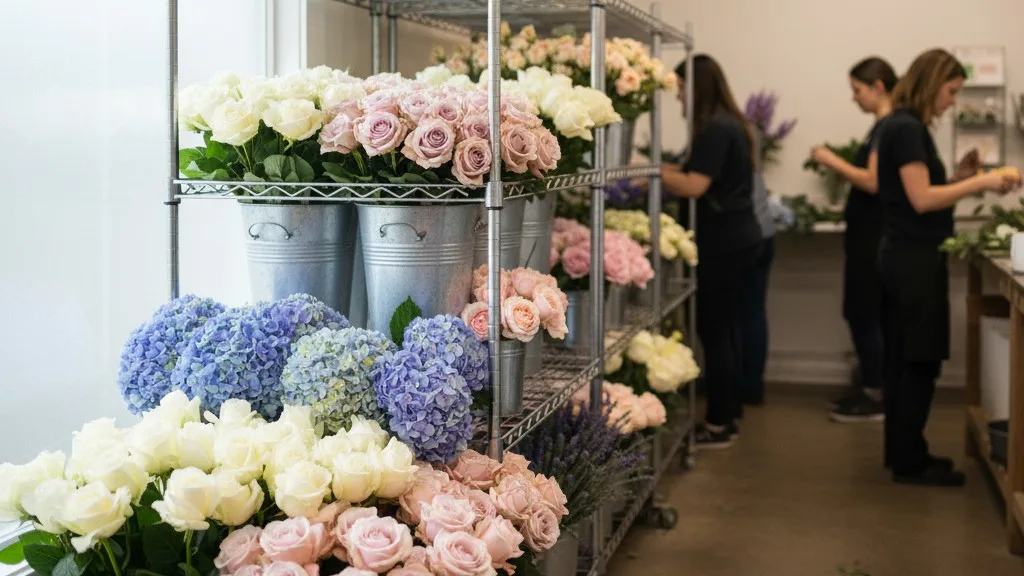
When your new stock arrives, process it immediately. This means giving everything a fresh cut, placing it in clean water with flower food, and storing it at the proper temperature. With a diverse fall inventory, it’s important to keep track of what you have. Modern flower shop software can help you manage your product catalog and track inventory levels, ensuring you know exactly what’s available for orders. For example, a system like Orkyd allows you to build recipes for your standard arrangements, automatically deducting the correct stems from your inventory as orders are placed.
As you design, practice a “first in, first out” (FIFO) system. Use the oldest (but still fresh) flowers first to minimize spoilage. Keep an eye on your inventory levels and adjust your purchasing based on what’s selling. If you find yourself with an excess of a particular flower, run a special or feature it in your daily arrangements to move it quickly. This proactive approach is key to growing your flower shop sustainably.
Fall Floral Design Ideas and Combinations
With a cooler full of beautiful seasonal materials, it's time to get creative. The key to memorable fall design is balancing color, form, and texture. Don't be afraid to experiment with combinations that move beyond the traditional.
Monochromatic with Texture
Create a stunning, high-end look by focusing on a single color family and loading up on texture. Imagine an arrangement with bronze football mums, rust-colored amaranthus, chocolate sunflowers, dried brown poppy pods, and delicate copper beech branches. This approach feels sophisticated and modern while still being undeniably autumnal.
Harvest-Inspired and Rustic
For a classic, comforting fall look, lean into the harvest theme. Combine bright yellow sunflowers, orange dahlias, and red mums with stalks of wheat, sprigs of hypericum berries, and oak leaves. This style is perfect for Thanksgiving centerpieces and hostess gifts. It feels abundant, warm, and welcoming.
Moody and Dramatic
Embrace the darker, more romantic side of fall. Pair deep burgundy dahlias and scabiosa with dark blue viburnum berries, black baccara roses, and branches of dark-leaved ninebark. Add trailing amaranthus for a cascading effect. This palette is perfect for fall weddings and events, offering a rich and dramatic alternative to brighter hues. It's a great opportunity to showcase your shop's unique artistic voice, a core part of building a strong brand identity explored in our florist's guide to modern flower shop software.
Conclusion
Embracing seasonal fall flowers opens up a world of creative possibilities for your floral designs. By focusing on the unique colors and textures of autumn, you can create arrangements that are not only beautiful but also fresher and more cost-effective. From classic mums and dahlias to textural grasses and berries, the fall season provides a rich palette to delight your customers and strengthen your business.
If you're looking for a better way to manage your orders, inventory, and deliveries this season, see how Orkyd brings everything together in one place. Book a conversation with us to learn more.