Switching your design bench away from green plastic bricks can feel daunting when your shop relies on speed and predictability. Making the transition to foam-free floristry does not mean you have to sacrifice the structural integrity of your daily arrangements or high-stakes event work. In fact, mastering natural mechanics often leads to healthier flowers, more organic designs, and a healthier bottom line for your shop.
For decades, traditional floral foam was treated as the default foundation for everything from low ceramic dish arrangements to towering urn displays. However, as modern shops look for ways to operate more sustainably and improve the vase life of their stems, alternative mechanics have moved from specialty techniques to daily operational standards. This guide will walk you through the exact workflows, materials, and steps needed to run a busy, productive design room without relying on single-use foam.
Why Make the Shift to Foam-Free Floristry?
Before changing how your design team preps every vessel, it is important to understand why this shift matters to your daily operations. Traditional floral foam is a non-biodegradable plastic product that crumbles into microplastics, which can eventually find their way into our water systems. When your design team inhales the dry dust of these bricks during prep, or washes the residue down the sink, it presents both environmental and personal health concerns.
Beyond the environmental impact, foam-free floristry actually improves the health and longevity of your flowers. Floral foam blocks the natural vascular pathways of flower stems. The tight, dense structure of the foam makes it harder for stems to draw up water compared to an open, water-filled vase. Bacteria also tends to multiply rapidly inside the porous structure of saturated foam. Stems placed in clean water, supported by physical mechanics like wire or metal, can drink freely, resulting in longer vase life and fewer customer complaints about premature wilting.
From a design perspective, foam-free methods allow for more natural, graceful movement. Flowers arranged in foam are locked into rigid, static angles. When you use open-water mechanics, stems can drape, arch, and bend naturally. This organic movement is exactly what modern customers look for when ordering custom arrangements. By adopting these methods, your shop can deliver the airy, garden-style designs that are highly profitable and highly requested.
Chicken Wire: The Workhorse of Foam-Free Floral Design
Coated chicken wire is the most versatile and cost-effective tool in a foam-free shop. It provides excellent structural support for both small daily vase arrangements and massive ceremony urns. Unlike raw metal wire, which can rust quickly and discolor your water or scratch delicate glass, plastic-coated chicken wire is durable, reusable, and safe for all types of vessels.
Selecting and Prepping Your Wire
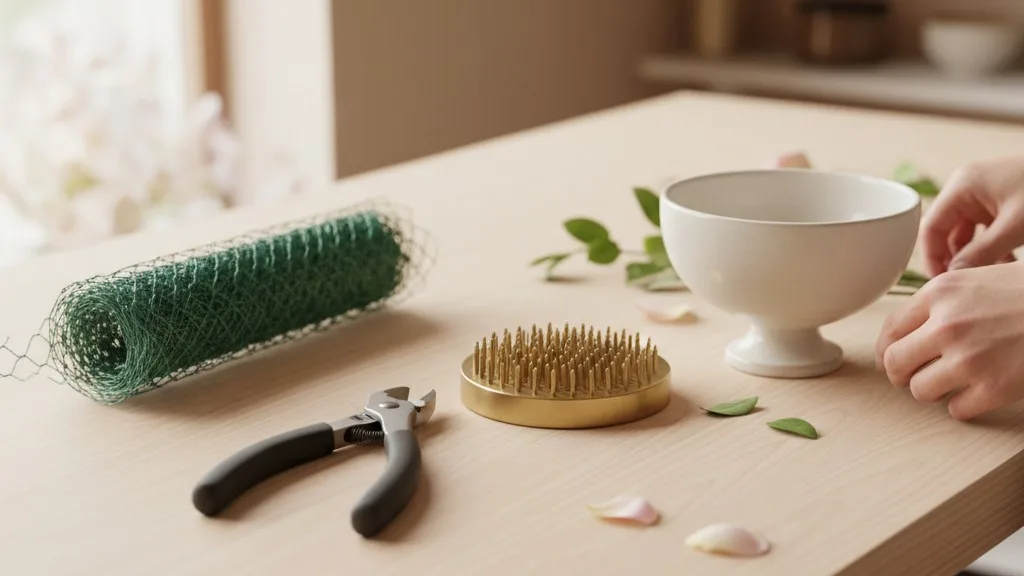
Keep a roll of vinyl-coated chicken wire (typically with one-inch or two-inch hexagonal mesh) near your prep sink. You will also need a dedicated pair of heavy-duty wire cutters. Never use your good floral shears to cut wire, as this will quickly nick and dull the blades, ruining them for clean stem cuts.
To prep a vessel, cut a square of chicken wire that is roughly double the width of the container's opening. For example, if you are using a ceramic compote with a six-inch opening, cut a twelve-inch square of wire. Fold the raw, cut edges of the wire inward to create smooth, rounded borders. This prevents the sharp metal tips from scratching the interior of your containers or poking your hands during design.
Forming the "Pillow"
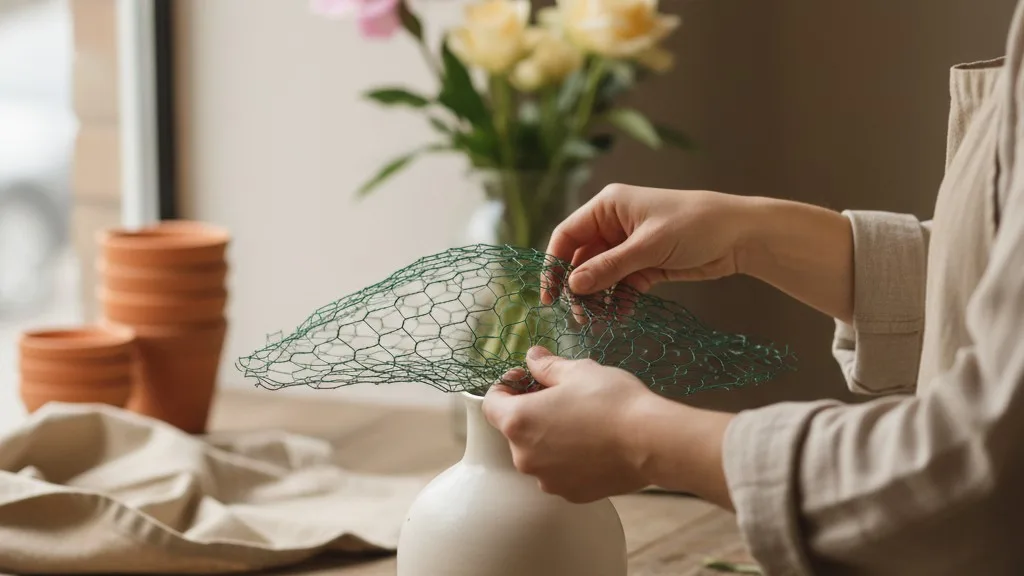
Gently dome and fold the wire square into a loose, three-dimensional ball or "pillow." You want to create at least two distinct layers of grid within the vessel. The top layer of wire will sit slightly below or flush with the rim of the container, while the bottom layer rests near the base. This dual-layer structure is what holds the stems securely at the correct angle.
Push the wire pillow into the vessel. It should fit snugly against the sides of the container. If the wire is too loose, it will shift when you add heavy stems, causing the entire arrangement to tilt. If it is too tight, you will struggle to insert stems without bending them.
Securing the Wire Grid
For low bowls, compotes, and wide-mouthed vases, you must secure the chicken wire to prevent it from lifting. Use waterproof floral tape (quarter-inch width is ideal) to create an anchor. Dry the rim of the vessel completely with a clean towel; tape will not stick to a damp surface.
Pull a strip of tape across the top of the wire pillow, adhering it firmly to both sides of the outer rim. Repeat this with a second strip of tape to form an "X" shape across the opening. To ensure the tape does not lift when it gets wet, wrap a single continuous band of tape around the outer perimeter of the rim, locking the ends of the "X" down. Once the mechanics are secure, fill the vessel with water and properly measured floral food before you begin designing.
Floral Frogs: Pin Holders and Ceramic Mechanics
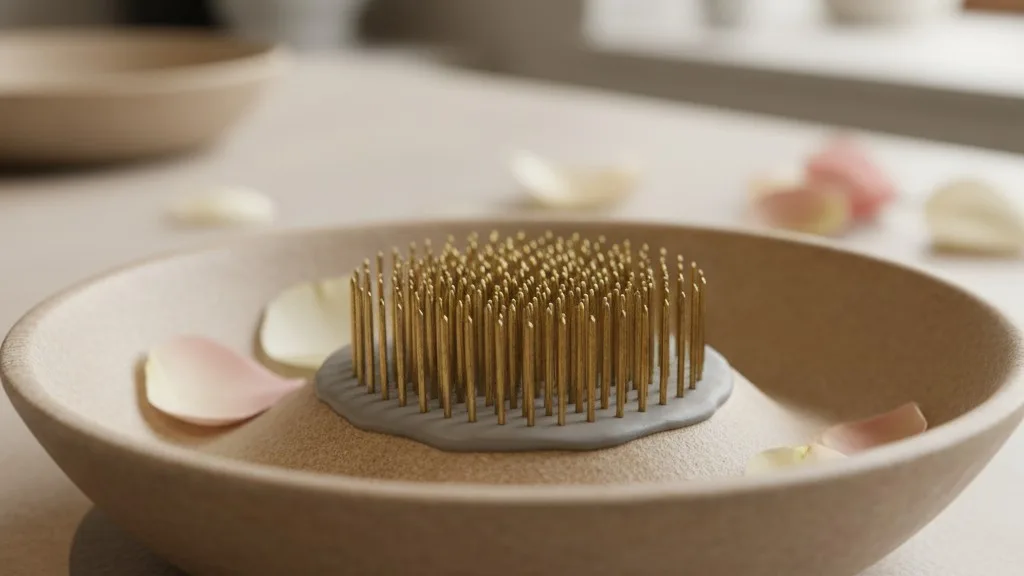
For low, shallow dishes, minimalist designs, and heavy woody branches, metal pin holders—commonly known as kenzans or floral frogs—are the perfect solution. These heavy metal bases feature upright, sharp brass pins that hold stems securely at precise angles.
Choosing the Right Frog
Keep a variety of sizes in your shop's hardgoods inventory. Heavy lead-based or brass-based frogs are necessary for large, top-heavy branches, while smaller, lighter frogs work well for delicate glass vessels. You can also find ceramic or glass frogs with pre-drilled holes, which are excellent for holding soft-stemmed spring flowers like tulips and daffodils.
How to Secure a Metal Pin Frog
Because metal frogs are heavy, they can slide and damage the bottom of your ceramic or glass containers if they are not anchored. To secure a frog, you must use floral clay (often sold as sticky clay or putty in rolls).
- Ensure both the bottom of the floral frog and the inside bottom of the vessel are completely clean and dry.
- Tear off a small strip of floral clay and roll it between your palms to create a thin, warm rope about the thickness of a pencil.
- Press this clay rope in a continuous circle onto the bottom ring of the metal frog.
- Place the frog in the center of the dry vessel and press down firmly with a slight twisting motion. This action flattens the clay and creates a watertight suction seal.
- Once anchored, fill the container with water. Test the seal by gently nudging the pins; the frog should remain completely stationary.
Designing on a Pin Frog
When placing stems onto a kenzan, cut the bottom of the stem at a straight angle rather than a sharp point. A flat cut provides more surface area for the pins to grip. For thick, woody branches, press the stem directly down onto the pins. If a branch is exceptionally thick, you can cut a small vertical slit up the bottom of the stem to help it slide onto the brass pins without bending them.
For very thin or delicate stems, gather two or three stems together, or wrap the base of the stem in a small piece of floral tape to thicken it before pressing it into the pins. This prevents the delicate flowers from wobbling or floating loose.
Natural Mechanics: Twigs, Foliage, and Nesting
One of the most sustainable approaches to foam-free floristry is using natural, fully compostable mechanics. By using organic structures to support your designs, you eliminate the need for plastics, wire, and tape entirely. This makes event teardown incredibly fast and environmentally friendly.
The Branch Grid Method
You can create a sturdy structural grid inside a vase using woody branches or springy twigs. Curly willow, dogwood, birch, or even sturdy privet branches work beautifully for this technique. Cut several short lengths of branches that are slightly wider than the diameter of your vase.
Wedging these twigs horizontally inside the neck of the vase creates a natural, interlocking framework. When you slide your flower stems down through the gaps in the twigs, they are held securely in place. As an added benefit, these branches add beautiful texture and visual interest to clear glass vases where mechanics are normally visible.
The Foliage Nest Method
For daily vase arrangements, you can use your greenery to build its own support system. Instead of placing your flowers first, begin by packing the neck of the vase with sturdy, branching foliage such as salal, eucalyptus, or myrtle. Interlace the stems of the greenery as you place them, creating a dense, woven nest of foliage inside the water.
Once your greenery foundation is established, slide your focal and accent flowers directly into the foliage nest. The dense network of woody greenery stems will hold your delicate blooms exactly where you want them. This method ensures that every part of your arrangement serves a structural purpose, reducing the need for plastic or metal accessories.
Managing Foam-Free Inventory and Recipe Costs
Transitioning to foam-free floristry will change how you manage your daily shop inventory and calculate your recipe costs. When you no longer buy cases of single-use foam, your hardgood expenses change. However, you may find that your team uses slightly more foliage or structural branches to build the mechanics for certain designs.
To protect your margins, you must track these structural elements accurately. Using a dedicated system for florist inventory management helps you monitor the cost of both your perishable stems and your reusable hardgoods. When designing a recipe, make sure to account for the cost of chicken wire, waterproof tape, or the rental fee of a metal kenzan that must be returned after an event. Matching your mechanics to the correct container shape is also crucial for reducing waste; you can learn more about this in our guide on flower vase shapes.
With Orkyd's web-based point-of-sale software, you can build precise product catalogs and recipes that account for every single element of a design—from the premium garden roses down to the exact length of chicken wire and tape used. This ensures your staff always prices arrangements accurately, keeping your shop profitable as you make the sustainable shift.
Transitioning Your Shop's Daily Workflow
Changing how your designers work requires clear communication and new daily habits. Use these practical steps to transition your team smoothly:
- Host a Hands-On Workshop: Spend an afternoon as a team practicing the pillow method with chicken wire and anchoring metal frogs. Let your designers feel the difference in stem placement and stability.
- Set Up a Prep Station: Keep pre-cut squares of chicken wire, rolls of waterproof tape, wire cutters, and floral clay in a centralized, dry location near the design benches. Having the tools ready reduces the temptation to grab a block of foam during a busy rush.
- Establish a Retrieval System: If you use high-quality metal kenzans or specialty ceramic frogs for local deliveries, charge a refundable deposit or include a note asking the customer to return the mechanic. Many shops offer a small store credit or a free loose wrap of flowers when a customer brings back a metal frog.
- Educate Your Customers: Include a small care card with your deliveries explaining that the arrangement was made using sustainable, foam-free mechanics. Teach them how to top off the water daily, explaining that because the flowers are in clean, open water, they will last much longer.
Keep in mind that waste disposal and composting regulations vary by state and province. Be sure to confirm local requirements for green waste to ensure your shop is sorting your compostable natural mechanics, foliage clippings, and soft-stem waste correctly according to your community's guidelines.
Embrace a Sustainable Future for Your Shop
Moving away from floral foam is a practical, rewarding step that improves stem health, elevates your design style, and reduces your shop's environmental footprint. By mastering chicken wire pillows, pin frogs, and natural branch grids, your design team can create breathtaking, durable arrangements with confidence. Managing these new workflows, recipes, and reusable hardgoods does not have to add administrative stress to your day.
Orkyd is built by LarkTek, an independent, family-owned software company, to handle the real, daily workflows of busy flower shops. Our web-based POS system makes it simple to manage custom orders, track perishable inventory, and build accurate recipes that keep your business profitable. To see how our flat monthly subscription can simplify your shop's operations, book a free 30-minute Orkyd demo today.