When words fail, families rely on florists to express their deepest condolences through flowers. Navigating these emotional transactions requires more than design skill; it demands a deep understanding of a professional sympathy flower etiquette guide. By mastering these delicate protocols, your shop can provide comfort to grieving families while ensuring every arrangement arrives at the correct location in perfect condition.
The Core Principles of Sympathy Flower Etiquette
Sympathy work represents some of the most emotionally charged and time-sensitive orders your flower shop will ever handle. Unlike everyday birthdays or anniversaries, there is zero room for error when designing and delivering for a funeral or a grieving household. To manage these expectations, your entire team—from the front counter staff to the design bench and the delivery drivers—must understand the fundamental rules of sympathy work.
The first step in any sympathy flower etiquette guide is distinguishing between "sympathy flowers" and "funeral flowers." While these terms are often used interchangeably by the public, they refer to two distinct categories of floral design with different destinations, styles, and purposes. Misunderstanding this distinction can lead to awkward situations, such as delivering a massive, formal standing spray to a small private residence, or sending a delicate, low-lying teacup arrangement to a grand church sanctuary where it will be lost on the altar.
Funeral flowers are sent directly to the funeral home, church, or cemetery. They are designed to pay tribute to the deceased and are typically large, formal, and structured to be viewed from a distance. These include casket sprays, standing sprays, easel wreaths, and large pedestal arrangements. They are temporary tributes meant to set a solemn, beautiful tone for the visitation and service. Because they are designed for public viewing, they must be sturdy, highly visible, and constructed to withstand transport and outdoor elements.
Sympathy flowers, on the other hand, are sent directly to the family's home or office. They are personal gifts of comfort intended to show the family that they are in your thoughts. These designs are smaller, more intimate, and typically created in vases, baskets, or as long-lasting potted plants. They should be easy for the family to move, care for, and display on a kitchen table or side board. Understanding this difference allows your staff to gently guide customers toward the appropriate purchase based on where the flowers will be sent.
Service Arrangements vs. Home Sympathy Flowers
When helping a customer choose the right design, it is helpful to categorize arrangements by their intended setting. For services, the casket spray is the most prominent floral piece. By traditional etiquette, the casket spray is reserved exclusively for the immediate family—usually the spouse, children, or siblings of the deceased. If a customer who is a distant relative or coworker asks to order a casket spray, your staff should gently explain this custom and steer them toward a standing spray, wreath, or basket instead. It is always wise to double-check with the family or the funeral director to ensure a casket spray has not already been ordered, preventing an awkward duplicate at the service.
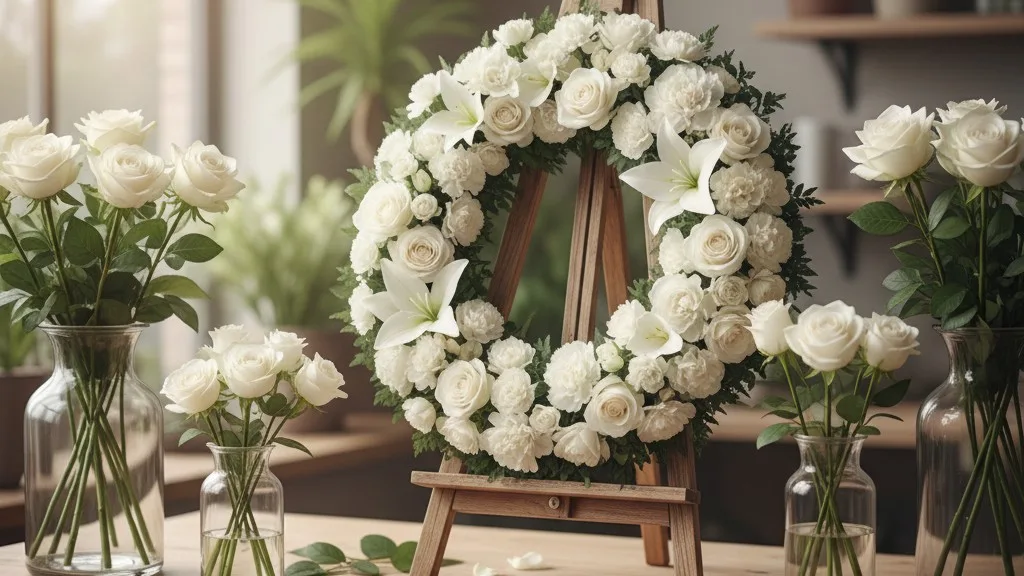
Standing sprays and wreaths are the standard tribute from close friends, business associates, and groups. These are designed on wire or wooden easels and are meant to stand around the perimeter of the casket or urn. Urn and memorial tributes are a growing category in modern memorial services. These are compact, highly detailed designs that frame a cremation urn or a framed photograph of the deceased. When designing these, low profiles and stable bases are essential to ensure they do not crowd or risk tipping the urn.
For home deliveries, the focus shifts to comfort and convenience. A grieving family is often overwhelmed with visitors, phone calls, and administrative tasks. They do not have the time or energy to search for a clean vase, cut stems, or arrange loose flowers. Therefore, loose hand-tied bouquets are generally discouraged for home sympathy deliveries. Instead, recommend designs that are already styled in water-retaining vessels. You can find detailed advice on choosing appropriate containers in our guide to flower vase shapes, which explains how different vessels affect both design stability and water capacity.
Baskets, ceramic pots, and sturdy glass vases are excellent choices for the home. They are self-contained and require minimal maintenance from the recipient. If you are looking to offer sustainable options for these arrangements, consider transitioning away from traditional floral foam. Our guide to foam-free floristry mechanics provides step-by-step instructions on using chicken wire, metal frogs, and natural structures to keep arrangements secure and hydrated without relying on single-use plastics.
Color Meanings and Cultural Considerations in Sympathy Design
Flowers carry their own silent language, and in times of grief, color choices can speak volumes. Traditionally, white flowers are the universal symbol of peace, purity, and reverence in Western cultures. White lilies, roses, carnations, and gladioli form the backbone of classic sympathy work. However, modern sympathy design is no longer limited to all-white palettes. Many families appreciate soft, soothing pastel tones like lavender, pale blue, peach, and blush pink, which offer a sense of warmth and gentle comfort.
Some customers may prefer bright, vibrant colors to celebrate a life well-lived. Yellows, oranges, and rich jewel tones can reflect a vibrant personality or a passion for gardening and the outdoors. When helping a customer choose colors, you can refer to our rose color meanings guide to help them select specific varieties that convey messages of love, friendship, or deep respect. Always ask the customer if the deceased had a favorite color or flower, as incorporating these personal details makes the arrangement far more meaningful.
Cultural and religious traditions play a massive role in sympathy flower etiquette, and these practices can vary significantly by community, state, or province. It is critical to describe these practices generally and instruct your staff to confirm local requirements with the family or officiating clergy before finalizing an order. Here are a few general cultural guidelines to keep in mind:
- Protestant and Catholic Christian Traditions: Almost all types of floral tributes, including standing sprays, crosses, and home arrangements, are welcome at both the funeral home and the church service.
- Eastern Orthodox Traditions: White flowers are highly preferred for these services. Arrangements are typically sent to the funeral home or church, but it is best to check with the specific parish regarding their rules on easel sprays inside the sanctuary.
- Jewish Traditions: Traditionally, flowers are not displayed at a Jewish funeral service or at the family home during the mourning period (Shiva). Instead, friends often send fruit baskets, kosher food baskets, or make charitable donations. However, reform or modern families may have different preferences, so always ask the client or the local synagogue.
- Buddhist Traditions: White or yellow flowers are traditional symbols of mourning. Red flowers should be strictly avoided, as red is associated with joy and celebration in many Asian cultures.
- Islamic Traditions: Practices vary widely. Some families welcome simple, elegant floral arrangements sent to the home, while others prefer that donations be made to charity instead of flowers. It is always best to consult with the family or the local mosque before sending flowers to an Islamic service.
Handling the Delicate Order-Taking Process
Taking a sympathy order requires a high level of empathy, patience, and active listening. Your sales staff must be trained to speak in a calm, respectful tone and to allow the customer plenty of time to make decisions. Grieving individuals may be distracted, emotional, or unsure of what they want. Avoid rushing them through the process, and never use aggressive sales tactics or pushy upsells during a sympathy consultation.
To ensure the order is executed flawlessly, your staff must gather specific, accurate details during the phone call or in-store consultation. Create a standardized checklist for sympathy orders that includes the following fields:
- The full name of the deceased (to cross-reference with funeral home listings).
- The date, start time, and location of the visitation and the service.
- The name of the funeral home, church, or cemetery handling the arrangements.
- A contact phone number for the venue or the family spokesperson.
- The specific card message, spelled out clearly to avoid typos.
Writing card messages can be incredibly difficult for grieving customers. Your staff should be prepared to offer gentle suggestions when words fail. Classic, respectful phrases like "With deepest sympathy," "Wishing you peace and comfort," or "In loving memory of [Name]" are always safe and appreciated. Keep a printed list of common sympathy card messages at your sales counter and on your digital order screens so staff can easily read options to customers who are struggling to find the right words.
Managing High-Stakes Sympathy Deliveries
A beautiful sympathy arrangement is only successful if it arrives on time, in perfect condition, and at the correct location. Late deliveries to a funeral service are a florist's worst nightmare and can permanently damage your shop's reputation. Managing these high-stakes deliveries requires a rigorous, systematic approach to scheduling and routing. For a complete blueprint on coordinating these sensitive shipments, read our dedicated funeral flower delivery guide, which covers everything from vehicle packing to venue communication.
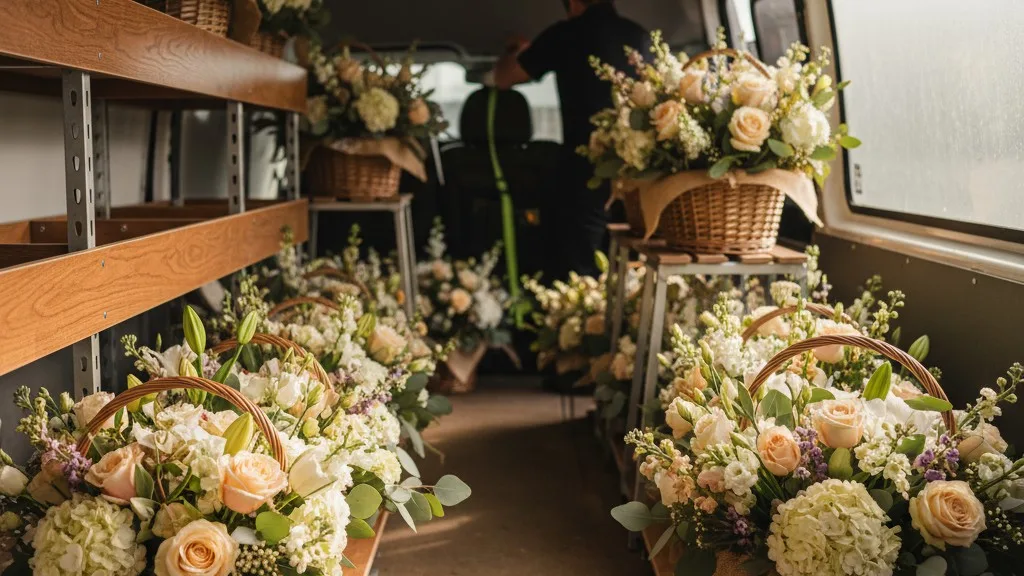
One of the most important rules of funeral delivery is to never rely solely on the delivery time provided by the retail customer. Customers are often stressed and may confuse the start of the public visitation with the start of the private family viewing or the service itself. Your delivery manager or office staff should call the funeral home or church directly to confirm the official service schedule and determine when the facility will be open to accept deliveries. Many funeral homes require flowers to be delivered at least two hours before the public visitation begins to allow staff time to arrange the room.
When loading the delivery van, ensure every arrangement is labeled clearly with a waterproof delivery tag. This tag should list the name of the deceased, the name of the sender, and the name of your shop. This allows the funeral director to easily organize the tributes and helps the family keep track of who sent which flowers when they write their thank-you notes later. If you are managing a high volume of deliveries on a busy weekend, proper planning is essential. You can learn how to streamline your drivers' schedules in our guide on how to organize multiple floral deliveries in one day.
Streamlining Your Shop's Sympathy Workflows
Because sympathy orders involve tight deadlines, specific delivery windows, and highly emotional clients, managing them on paper tickets or generic point-of-sale systems can lead to costly mistakes. Lost delivery slips, misread addresses, or forgotten card messages can ruin a service and devastate a grieving family. Modern flower shops protect their operations and their customers by using dedicated digital tools designed specifically for the floral industry.
A dedicated shop system helps you centralize all sympathy orders, keep track of delivery schedules, and store detailed customer records. Transitioning to a digital workflow allows your entire team to stay on the same page, whether they are taking an order at the front counter, designing at the bench, or loading the delivery van. To understand how these systems can transform your daily operations, read our article on how a flower shop order management system simplifies your daily workflow.
By replacing paper chaos with digital clarity, your designers can see exactly which sympathy pieces need to be built first based on service times, and your drivers can access real-time route lists on their mobile devices. This level of organization not only reduces stress in your shop but also ensures that you can consistently deliver the high-quality, respectful service that grieving families deserve during their most difficult moments.
Providing Compassionate Service When It Matters Most
Mastering sympathy flower etiquette is a continuous process of learning, listening, and refining your shop's internal workflows. When you handle these sensitive orders with care, dignity, and absolute professionalism, you build deep, lifelong relationships with the families in your community. They will remember the comfort your flowers brought them, and they will trust your shop to handle all of life's milestones in the years to follow.
To see how a modern, web-based platform can help your shop manage sensitive sympathy orders, track delivery schedules, and simplify your daily operations, consider exploring Orkyd. Built specifically for independent florists and funeral-home flower shops, Orkyd offers a flat monthly subscription with no percentage taken from your sales. To learn more about our simple, reliable tools, book a free 30-minute conversation and demo with us today at the Orkyd demo booking page.