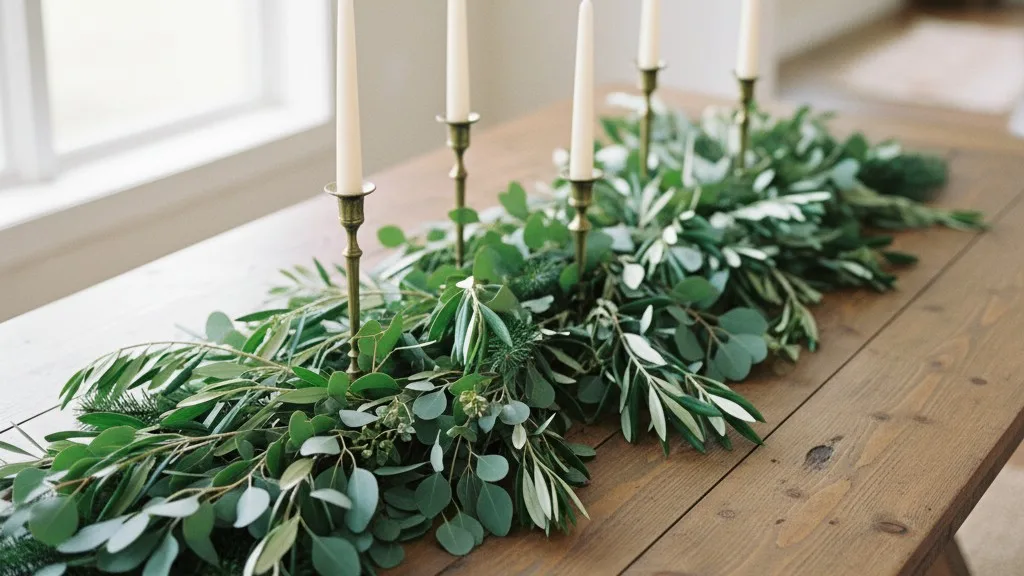
Creating an unforgettable dining experience often starts with the foliage running down the center of the table. When designing a seasonal dinner tablescape, combining cultivated cut greenery from your cooler with wild, foraged elements creates a rich texture that standard wholesale bunches cannot match. This guide walks you through the step-by-step workflow of sourcing, prepping, and styling high-impact greenery runners and installations that remain fresh throughout an event.
Assessing the Venue and Table Dimensions for the Perfect Layout
Before you pull a single branch from your cooler or clip a stem from the wild, you must understand the physical constraints of the dining table. A beautiful design fails if it blocks guest conversation or leaves no room for dinnerware. The industry standard for guest comfort requires maintaining clear sightlines across the table. This means your tablescape elements should either sit below twelve inches or rise above twenty-four inches. For a low, lush greenery runner, aim to keep the highest points of your foliage under ten inches to allow for natural movement and candle placement without obstructing the view.
Table width determines your design footprint. A standard eight-foot banquet table is thirty inches wide. Once you place dinner plates, glassware, and flatware on both sides, you are left with a narrow strip of ten to twelve inches down the center for your design. If the venue uses wider imperial tables, which are typically thirty-six to forty inches wide, you have more freedom to expand the width of your runner and incorporate larger focal elements like potted plants, wide-reaching branches, or complex mechanical bases.
Table length dictates your stem count and mechanical setup. A single continuous runner on a long king's table requires a different structural approach than a series of disconnected, modular arrangements. Always ask the venue coordinator or event planner for the exact table layout, including the placement of shared platters if the meal is served family-style. If guests will be passing heavy bowls of food, a continuous foliage runner can be easily damaged. In those cases, opting for a series of small, heavy vessels that can be easily repositioned is a safer, more practical choice.
Sourcing and Conditioning Foraged and Cut Greenery Safely
The magic of a modern seasonal dinner tablescape lies in the contrast between clean, uniform wholesale greens and the unpredictable, organic lines of foraged material. When foraging, look for branches with interesting curves, seed pods, or seasonal color changes. Oak branches with lingering acorns, wild grapevine, trailing ivy, and fruiting olive branches add a sense of place that you cannot buy in a standard bunch of leatherleaf or salal. However, foraging requires strict adherence to local laws and ethical harvesting practices. Always obtain permission before harvesting on private land, and research local regulations regarding public parks or state forests, as rules vary significantly by state and province.
Conditioning is the most critical step in preventing your foraged material from wilting before the first course is served. Wild plants do not have the benefit of commercial post-harvest hydration treatments. As soon as you clip a branch, submerge the cut end in clean, tepid water. Once back at the shop, recut the stems at a sharp angle. For heavy, woody branches, use sharp bypass pruners to split the bottom inch of the stem vertically. This increases the surface area available for water absorption. Place the stems in clean buckets filled with warm water mixed with professional flower food, and let them hydrate in a cool, dark place for at least twelve to twenty-four hours before designing.
Combine these wild elements with reliable, long-lasting cut greenery from your inventory. Silver dollar eucalyptus, Italian ruscus, and huckleberry provide a dependable, clean base that holds up well even out of water. Before mixing them, inspect all foraged material closely for pests. Aphids, spiders, and caterpillars are common on wild branches. Give your foraged foliage a gentle shake outdoors, wash the leaves with a soft spray of water if needed, and treat them with an appropriate horticultural spray if you spot any active pests. The last thing you want is a spider crawling across a guest's bread plate mid-dinner.
Selecting Eco-Friendly Mechanics for a Long-Lasting Seasonal Dinner Tablescape
Historically, florists relied on single-use plastic floral foam to hold greenery runners in place. Today, eco-conscious clients and designers prefer sustainable alternatives that do not release microplastics into the environment. Transitioning to foam-free methods not only protects the planet but also allows your greenery to drape and cascade more naturally. If you are new to these techniques, you can explore our comprehensive guide on Foam-Free Floristry: Guide to Chicken Wire, Frogs, and Mechanics to learn more about the tools available to modern shops.
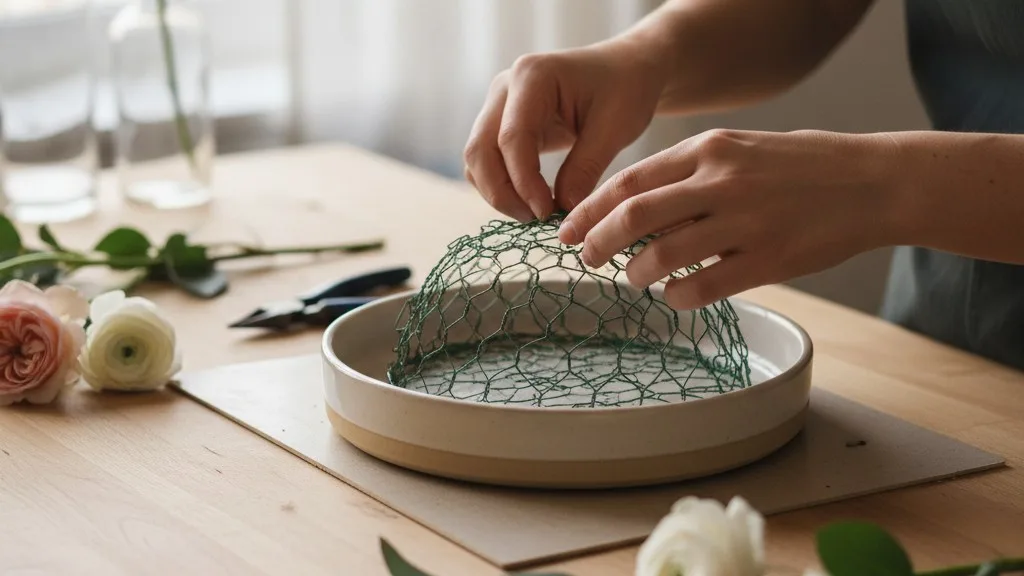
For a continuous greenery runner, a chicken wire cage is one of the most reliable mechanics. You can roll out a length of vinyl-coated chicken wire, fold it into a long, flat pillow shape, and secure it to the center of the table using waterproof floral tape or heavy-duty museum wax to prevent sliding. The open grid of the wire allows you to insert thick, woody stems at natural angles, creating a secure base that will not shift during the event. To keep delicate greenery fresh, tuck small, water-filled floral tubes into the wire grid, hiding them beneath the larger foliage leaves.
Another effective method for a seasonal dinner tablescape is using heavy metal pin frogs, also known as kenzans, placed inside low, shallow ceramic or brass dishes. The weight of the metal frog keeps top-heavy branches from tipping over, while the shallow water reservoir ensures your greenery stays fully hydrated throughout the evening. If the design calls for a completely loose, direct-on-table look, you can lay down a protective barrier of wax paper or a thin plastic runner to protect the venue's linens from moisture and sap, then lay down heavy base branches of hardy greens like salal or magnolia that can survive for hours without a direct water source.
Building the Base Layer with Structural Foliage
Every successful tablescape design begins with a strong structural foundation. This base layer defines the length, width, and overall movement of the runner. Start by placing your heaviest, most durable foliage along the center of the table. Magnolia leaves, bay laurel, and standard green huckleberry are excellent choices for this initial step. Their stiff stems and broad leaves create a dense cover that hides your mechanics, such as chicken wire or water tubes, right from the start.
As you lay down your structural branches, work from the outside edges inward. Place your longest branches at the ends of the table, letting them drape gently over the edges to soften the sharp corners of the furniture. Then, work along the sides of the runner, angling the stems slightly downward to meet the tabletop. This ensures that the design looks integrated with the surface rather than sitting awkwardly on top of it. Keep your placements balanced but not perfectly symmetrical; a natural, organic flow is much more appealing than a rigid, blocky line of green.
Once the perimeter is established, fill in the center of the runner with medium-sized structural pieces. Ensure that you insert stems from multiple directions to mimic how plants grow in nature. Avoid placing all your stems facing one way, which can make your runner look like a fallen tree trunk. Instead, weave the stems together, overlapping the leaves to create a dense, green tapestry that completely conceals the table surface beneath your design area. This structural layer acts as the skeleton that will support your more delicate, textured elements in the next steps.
Layering Textures and Tonal Shifts for Depth and Movement
Once your structural base is secure, it is time to add depth, dimension, and visual interest. A flat, single-variety greenery runner can look heavy and uninviting. To create a captivating seasonal dinner tablescape, you need to layer different leaf shapes, surface textures, and color tones. Combine broad, glossy leaves like camellia with fine, airy textures like plumosus fern, explosion grass, or delicate conifers. The contrast between shiny and matte surfaces, and wide and narrow leaves, immediately draws the eye in.
Color variation is equally important. Green is not just green; it ranges from deep forest pine and cool, dusty blue-gray eucalyptus to bright chartreuse moss and warm, golden-bronze autumn oak leaves. Use these tonal shifts to create a sense of movement along the table. You can transition from deep, rich greens at the ends of the table to lighter, brighter tones in the center where the main action of the dinner takes place. If you are designing for a specific time of year, incorporate branches that show natural seasonal transitions, such as maple leaves with hints of orange or blueberry stems turning deep red.
To prevent your tablescape from looking static, introduce trailing elements that break the boundaries of the main runner. Vines like jasmine, clematis, or wild ivy can be woven through the design, stretching out toward the place settings or wrapping gently around the bases of wine glasses. These whimsical, reaching stems add a sense of life and spontaneity to the table, making the entire arrangement feel as though it is growing directly out of the wood. Keep these trailing pieces light and sparse so they do not interfere with the actual dining process.
Integrating Candlelight, Perishables, and Final Accents
A dinner tablescape is never complete without the warm glow of candlelight. The interaction between flickering light and fresh foliage creates a magical dining atmosphere. When placing candles, safety must be your top priority. Ensure that no leaves or dry twigs hang directly over open flames. Use tall taper candles in heavy, stable holders to lift the flames well above the greenery, or place votive candles inside deep glass cylinders that protect both the flame and the surrounding foliage from heat and dripping wax.
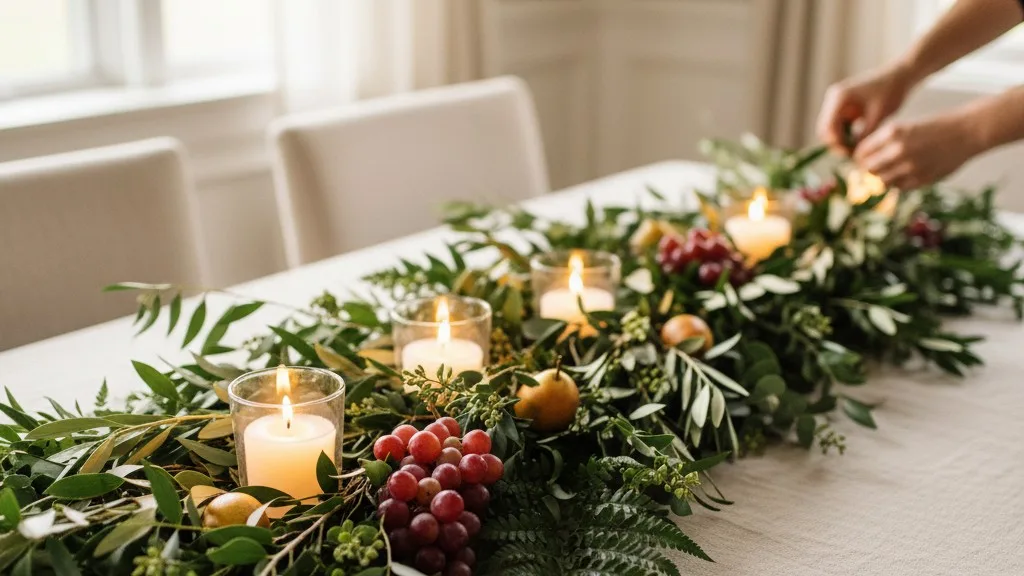
To elevate your seasonal dinner tablescape further, consider weaving in non-floral perishables that reflect the harvest of the season. In autumn, small gourds, persimmons on the branch, and dark purple grapes add beautiful color and weight to the design. In spring or summer, you can use green apples, artichokes, or sliced citrus fruits. If you are using cut fruits, place them on small wax paper discs to protect the linens from acidic juices. These edible accents add an unexpected, tactile element that makes the table feel abundant and celebratory.
Finally, step back from the table and view the design from the perspective of a seated guest. Sit in several chairs around the table to check for any awkward gaps, exposed mechanics, or high branches that block your view of the person sitting opposite you. Fill in any empty spots with small tufts of delicate foliage or a few well-placed votives. This final edit is what separates a professional, polished design from a messy, amateur setup. Ensure everything feels cohesive, balanced, and ready for the evening's guests.
Managing Inventory and Recipe Costs for Large Tablescape Projects
While designing on-site is creative and rewarding, running a successful flower shop requires strict attention to your margins and inventory. Large tablescape installations can quickly consume your profit if you do not manage your stem counts and recipe costs carefully. Overbuying greenery is a common pitfall for busy florists, especially when trying to ensure a runner looks full. To protect your bottom line, you can read our guide on How Florist Inventory Management Can Drastically Reduce Floral Waste to build better buying habits.
Before ordering your wholesale greens, create a detailed recipe for every foot of the table. For example, a typical lush greenery runner might require three stems of salal, two stems of silver dollar eucalyptus, and one stem of Italian ruscus per linear foot. Multiply these numbers by the total length of the tables to generate an accurate wholesale order. When you incorporate foraged material, use it to add volume and unique character, allowing you to reduce your reliance on expensive imported greens while maintaining a high-end, bespoke look. For more strategies on managing your buying during peak times, check out our Practical Guide to Florist Inventory Management for Busy Seasons.
To keep your shop organized and profitable, tracking these recipes, costs, and customer details in one central system is essential. Modern flower shops benefit greatly from dedicated management tools that streamline this process. Orkyd provides a web-based point-of-sale and inventory system built specifically for the unique workflows of florists, helping you track your perishable inventory, build accurate recipes, and manage delivery schedules without the headache of messy paperwork or complicated spreadsheets.
Bringing Seamless Organization to Your Floral Designs
Designing a breathtaking seasonal dinner tablescape requires a balance of artistic vision, physical mechanics, and smart business management. By sourcing high-quality cut greens, integrating unique foraged elements, and utilizing sustainable, foam-free mechanics, you can create memorable dining experiences that your clients will talk about for years. However, behind every beautiful event is a mountain of logistics, from tracking inventory and managing recipes to coordinating timely deliveries.
Orkyd is designed to simplify these daily operational challenges for independent flower shops and funeral-home florists alike. Our web-based software allows you to manage your product catalog, track location-level stock, and coordinate complex delivery routes from any device, whether you are at the design bench, in the cooler, or on the road. With features like Stripe payments, QuickBooks sync, and SMS messaging, you can keep your shop running smoothly while focusing on the creative work you love.