When a customer calls to order sympathy flowers, they are often distressed and looking for guidance. They want to express their condolences appropriately but may not know the difference between arrangements for a funeral service and those sent to the family’s home. Your role as a florist goes beyond design; it’s to provide compassionate, clear advice on sympathy flower etiquette, ensuring their gesture brings comfort, not confusion.
Understanding this distinction is key to serving your customers well during a difficult time. Funeral flowers are a public tribute to the deceased at the service, while arrangements for the home are a personal message of comfort to the grieving family.
Understanding the Core Difference: Funeral vs. Home
The first step in guiding a customer is to clarify the destination and purpose of the flowers. The setting dictates the appropriate size, style, and type of floral arrangement. One is a formal tribute for a public gathering, while the other is an intimate gesture for a private residence.
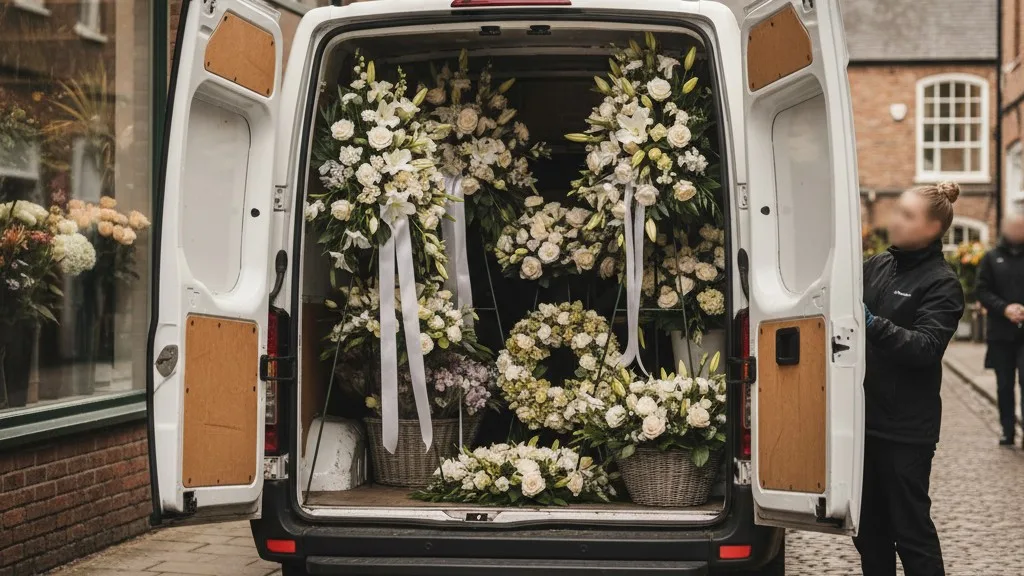
Flowers sent to a funeral home, mortuary, or place of worship are intended for the funeral or memorial service itself. These arrangements are typically larger and more formal. They are designed to be seen from a distance in a large room and contribute to a peaceful, respectful atmosphere for all attendees. They honor the life of the person who has passed away.
In contrast, flowers sent directly to the family’s home serve a different purpose. These are personal expressions of sympathy meant to comfort the bereaved in their private space. These arrangements should be smaller, more intimate, and practical for a home environment where space may be limited and the family is receiving many visitors. They are a direct message to the family, saying, “We are thinking of you.”
Guiding Customers on Flowers for the Funeral Service
When a customer wants to send flowers to the service, they are participating in a long-standing tradition of honoring the deceased. These arrangements are typically from extended family, friends, colleagues, or community groups. Your guidance can help them choose a tribute that is both beautiful and appropriate.
Types of Funeral Arrangements
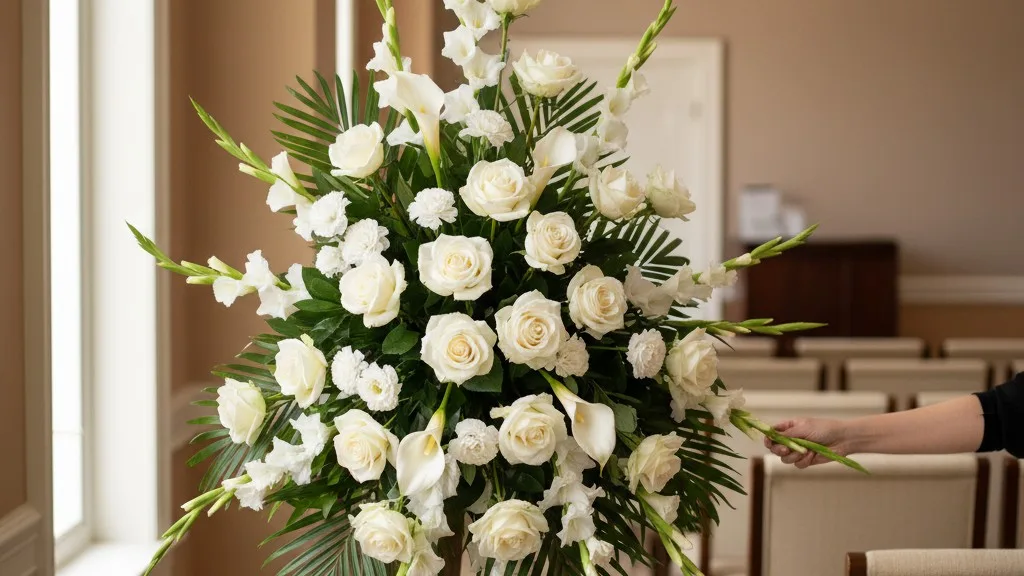
The style of funeral flowers is distinct. They are often one-sided and designed for display on an easel or near the casket. Common types include:
- Standing Sprays: These are large, impressive arrangements designed on a stand or easel. They create a backdrop for the service and are a very traditional choice. Sprays can be single-ended, double-ended, or formed into specific shapes.
- Wreaths, Crosses, and Hearts: These shaped arrangements carry deep symbolic meaning. Wreaths represent eternal life, crosses signify faith, and hearts express love. They are also displayed on easels and are a prominent, formal tribute.
- Casket Sprays: Also known as casket covers, these arrangements are placed directly on top of the casket. They are typically ordered only by the immediate family—a spouse, children, or parents of the deceased. If a customer who is not immediate family requests one, it's a delicate opportunity to guide them toward a standing spray or other tribute instead.
- Interior Casket Flowers: These are very small arrangements, like a small spray or nosegay, placed inside the casket. Like the casket spray, these are chosen exclusively by the closest family members.
Scale, Style, and Logistics
Funeral flowers need to have a visual presence in a large space like a chapel or viewing room. Encourage designs that are full and substantial. While a delicate, airy arrangement might be beautiful up close, it can get lost in a funeral setting. The color palette can vary widely, from traditional whites and creams to vibrant colors that celebrate the personality of the deceased. It is always appropriate to ask the customer if they know of any preferences the family might have.
Coordinating with the funeral home is a critical part of your shop’s workflow. You need to confirm the service date, time, and location, as well as the correct spelling of the deceased's name. It's also wise to ask if there are any restrictions on deliveries or flower types. Building a good relationship with local funeral homes makes this process much smoother. For shops connected to a funeral home, this workflow can be even more direct. Orkyd, for example, integrates with Kindred funeral home software, allowing funeral directors to place orders directly with their trusted florist, ensuring all details are accurate from the start.
The Enclosure Card
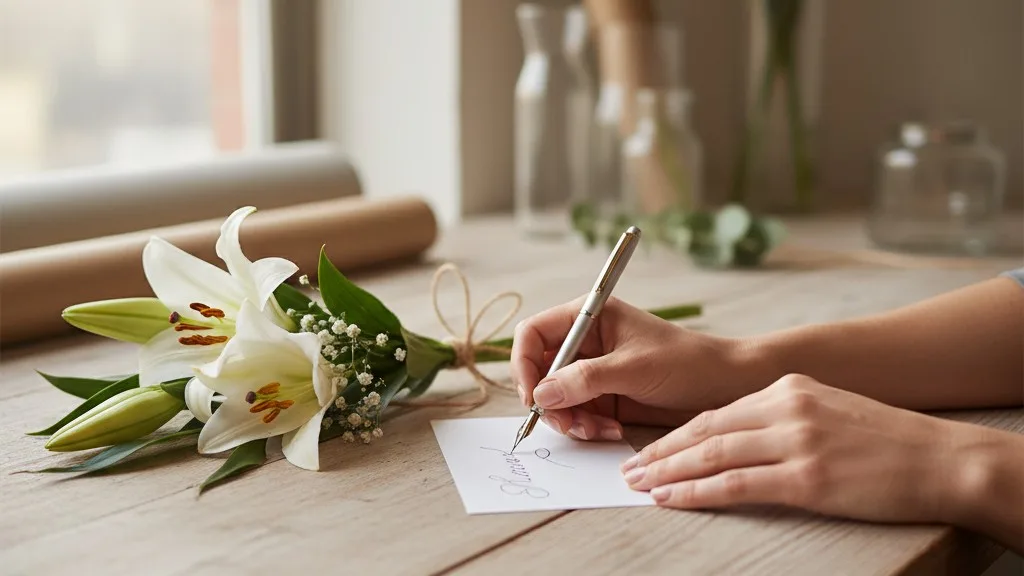
The message on the small enclosure card is just as important as the flowers. It should be brief and heartfelt. Advise customers to clearly state their full name or the name of the group (e.g., “The Smith Family” or “The Accounting Department at Acme Corp.”) so the family knows whom to thank. Simple sentiments like “With deepest sympathy” or “Our thoughts are with you” are always appropriate.
Advising on Sympathy Flowers for the Family's Home
Sending flowers to the home is a more personal gesture. It tells the family they are in your thoughts before, during, and especially after the funeral, when the initial wave of support has subsided. These arrangements should be chosen with the family’s immediate needs and environment in mind.
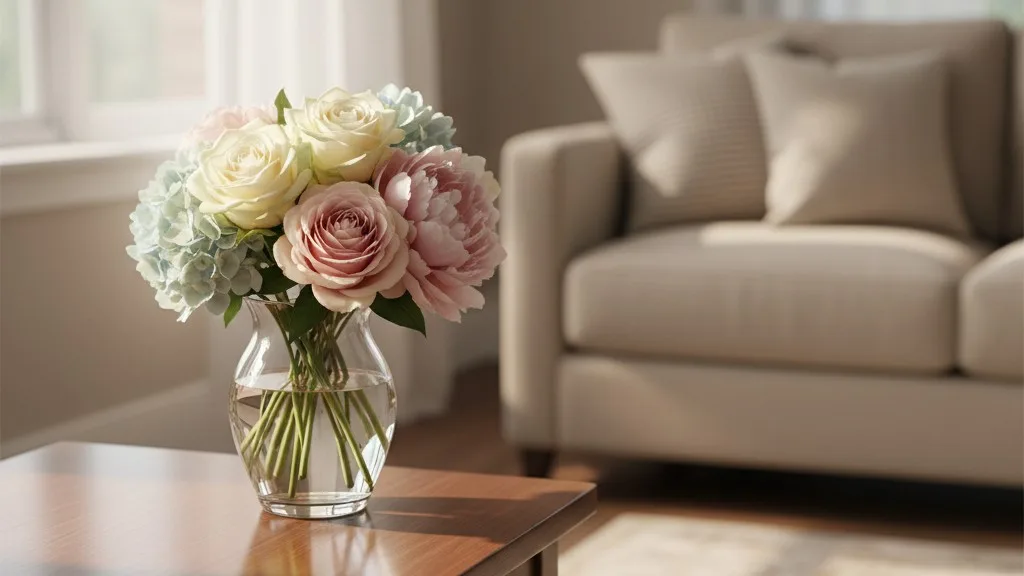
Types of Arrangements for the Home
Unlike formal funeral pieces, arrangements for the home should be ready to display and easy to care for. The family will be emotionally and physically exhausted, so the last thing they need is a project.
- Vase Arrangements: A floral arrangement already designed in a vase is the most popular and practical choice. It can be placed on a table or counter immediately. This is a great opportunity to use your design skills to create something truly personal and beautiful. The container itself becomes part of the gift, and choosing the right one is an important design decision. You can learn more in our guide to flower vase shapes.
- Potted Plants: A living plant, such as a peace lily, orchid, or an elegant dish garden, is a lasting tribute. It can provide comfort for weeks or months after the services have ended, serving as a gentle reminder of the support the family received. Make sure to include care instructions.
- Gourmet or Fruit Baskets: While not flowers, these are also thoughtful gifts to send to the home. Grieving families often have many visitors and may not have the time or energy to cook. A basket of easy-to-share food can be a very practical and appreciated gesture.
Scale, Style, and Timing
Sympathy arrangements for the home should be appropriately scaled for a residential space. A massive standing spray would be overwhelming on a dining room table. Opt for all-around designs that are beautiful from any angle. The color palette can be softer and more subdued, or you might suggest using the deceased’s favorite flower or color as a thoughtful, personal touch.
The timing of the delivery is also more flexible. Flowers can arrive before the funeral, but it is often most impactful to send them a week or two after. During this time, the house grows quiet and the family is beginning to navigate their new reality. A fresh bouquet arriving then can be a powerful reminder that they are not alone.
Navigating Cultural and Religious Sensitivities
Sympathy traditions vary significantly across cultures and religions, and what is a beautiful tribute in one tradition may be inappropriate in another. While you are not expected to be an expert in all world religions, having some general knowledge and knowing when to ask questions is part of providing excellent service.
For example, in Jewish tradition, it is not customary to send flowers to a funeral or to the family during the shiva mourning period; a fruit or food basket is a more appropriate gesture. In many Eastern Orthodox funerals, white flowers are preferred as they symbolize purity and rebirth. For some Islamic services, flowers are welcome, while for others they are not, with customs varying by community. Buddhist traditions often favor white or yellow flowers, with red being avoided.
These are general observations, not strict rules. The most important thing is to be sensitive. If your customer is unsure, the best course of action is to gently suggest they ask a family member or to call the funeral home directly. Presenting this as a way to ensure their gesture is received as intended is always the right approach. Always advise your customers to check on specific customs if they are uncertain.
Handling Common Customer Scenarios
As a florist, you will encounter many different situations. Here is how to handle a few common ones with grace and professionalism.
- “In Lieu of Flowers”: Sometimes, a family requests charitable donations “in lieu of flowers.” If a customer still wants to send flowers, you can explain the family's request but also note that a small, tasteful arrangement sent to the home after the funeral is often a welcome and comforting exception. It's a personal gesture to the family rather than a public tribute at the service.
- The Late Order: A customer may call after the funeral has already taken place, worried they have missed their chance to express sympathy. Reassure them that it is never too late. This is the perfect opportunity to suggest sending a beautiful vase arrangement or a living plant to the family’s home.
- Ordering from Out of Town: An out-of-town caller relies completely on your expertise. Take the time to walk them through the options, explaining the difference between funeral and home arrangements. This builds trust and ensures they feel confident in their purchase. Clear communication about the design, the card message, and the delivery details is paramount.
Your flower shop’s ability to manage these details efficiently, from order taking to delivery routing, is essential. A reliable system like a dedicated flower shop workflow software helps you keep track of every order's specific requirements, ensuring that each tribute is handled with the care it deserves.
Your Role as a Compassionate Guide
Helping a customer navigate sympathy flower etiquette is one of the most meaningful services you provide. By understanding the distinction between arrangements for the funeral and for the home, you can offer clear, compassionate advice. You help your customers express their feelings perfectly, providing a measure of comfort to a family during their most difficult moments.
Orkyd is designed to manage the detailed workflows of a busy flower shop, including the specific needs of sympathy and funeral orders. To see how our software can help you handle these important moments with grace and efficiency, book a conversation with us.